book review

unnamed.jpg

Review (published Friday 24th February, i paper)

Three Daughters of Eve

By Elif Shafak

Viking, £14.99

“Motherlands are beloved, no doubt; sometimes they can also be exasperating and maddening. Yet I have also come to learn that for writers and poets for whom national borders and cultural barriers are there to be questioned, again and again, there is, in truth, only one motherland, perpetual and portable. Storyland”.  So writes Elif Shafak – author of novels including Honour and The Forty Rules of Love – in the acknowledgements to her atmospheric, ambitious new novel which is a feat of skilful storytelling exploring both a motherland and how it feels to move away from one’s motherland as the protagonist Peri leaves her hometown of Istanbul for a new life in England. Powerfully portrayed is the painful tug of the ties that bind us to both people and places.

The intricate, multilayered novel opens in the present-day when Peri, a Turkish housewife is stuck both metaphorically and literally: a person “squeezed between what they were expected to be and what they wished to be”, she is also stuck in the Istanbul traffic with her 12 year old daughter, en route to a dinner party in a palatial seaside mansion. When a beggar snatches her handbag and she struggles to get it back, the contents tumble to the ground including an old photograph of three young women and their university professor at Oxford. That photograph – like the Proustian madeleine – prompts long buried memories to flood back of her turbulent time as a student. Chapters thereafter move between the present-day – including some deliciously satirical dinner party discussion – and the story of the past in both Istanbul and Oxford. It’s a stylistic technique of delayed gratification which succeeds in leaving the reader at times ravenously hungry for the next section of story.

Here is a hugely evocative portrait of Istanbul, a “city that encompassed seven hills, two continents, three seas and fifteen million mouths”. Violence ruptures lives, but brutality is brilliantly juxtaposed with moments of affection, such as a mother gently moving a lock of her daughter’s hair behind her ear (“The gesture, simple and affectionate, set off a rush of tenderness inside Peri”).

The author conjures both a panoramic view of place and the minute particularities of human relationships. The mother/daughter dynamic is movingly delineated through three generations. Peri was “an unusually intense and introverted child”, sensitive her mother’s mercurial moods ( “Depression was a word unheard of in the house. Headaches, she would explain”). Decades later, her twelve year old daughter Deniz mutters that she wishes to have “a normal mother”.  But through questioning cultural norms, the novel challenges the concept of a “normal mother”, and indeed motherland.

The story resists rigid dualities, exploring the space between.  For Peri, “her very existence became a battleground between competing world views. The thought that she had to make a choice, once and for all, between her mother’s defiant religiosity and her father’s defiant materialism almost paralysed her”. It’s as a student that the binaries break down – studying a course on God led by an eccentric professor prompts a fascinating examination of faith. Friendship is also a poignant theme. Piri arrives in Oxford in the year 2000 and the novel compellingly captures both her “sickening sense of loneliness”, how she “felt like an imposter”, as well as the exhilaration of freedom and intellectual exploration, and her developing friendship with Shirin and Mona with whom she discusses Islam, feminism, home and belonging. The story unfolds a scandal from her student days which ruptured relationships – and explores the possibility of healing what has been broken.

“You were not allowed to bring meat or dairy products into England from outside European countries, but no one said you couldn’t bring along your childhood fears and traumas” –  the story subtly traces the impact of characters’ childhood fears and traumas, how the weight of the painful past presses upon the present, and the paradoxical need to remember what has been forgotten in order to move on.

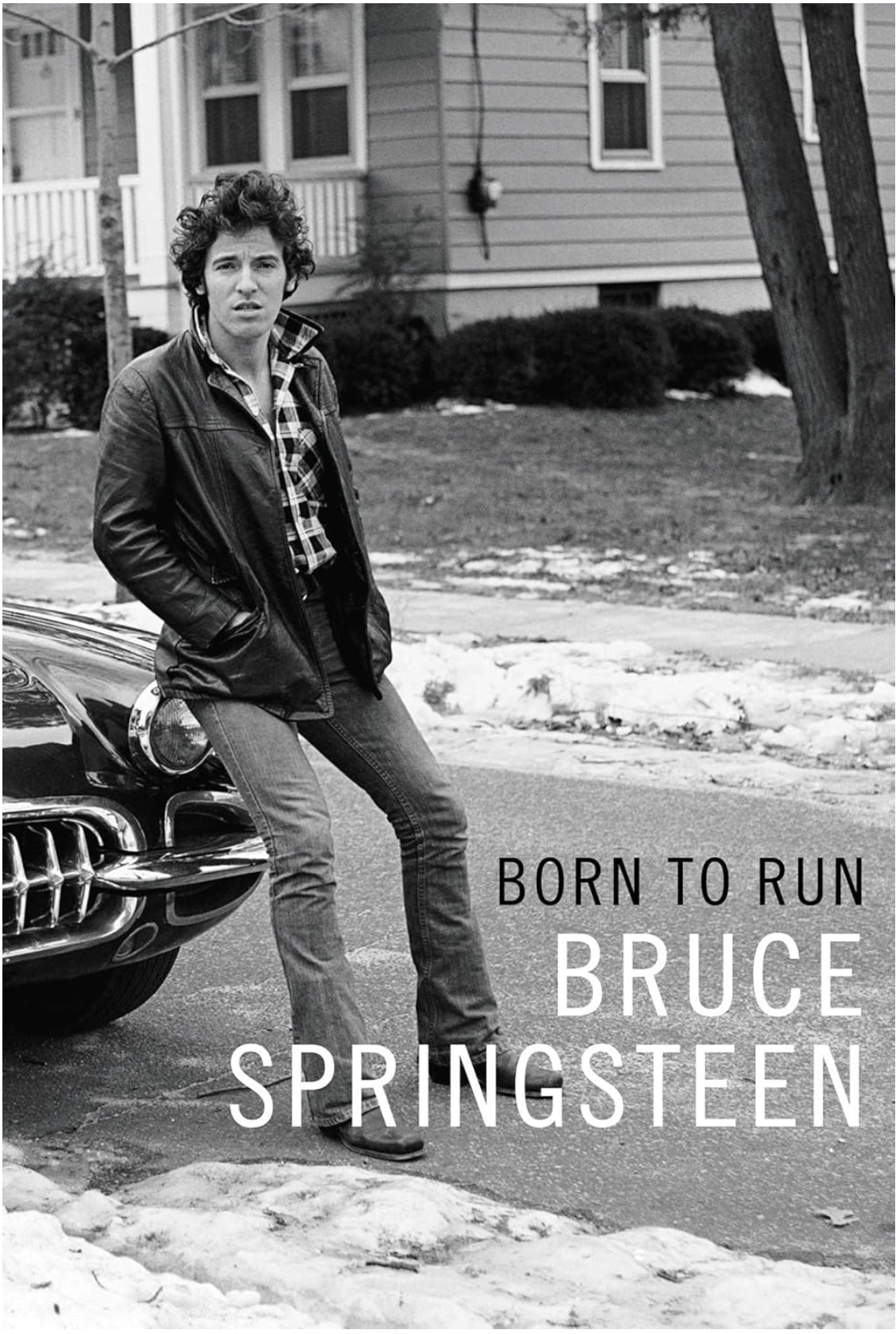
Book Review: BORN TO RUN by BRUCE SPRINGSTEEN


PUBLISHED IN INEWS, 30th September 2016

Born to Run

By Bruce Springsteen

Simon & Schuster, £20

The first word of this powerful memoir is “I” and the last word is “home”, and in the 500 pages in-between Bruce Springsteen charts with wit and wisdom how home – the desire to leave, the yearning to return and ultimately, to build a sense of home in music – is at the core of his extraordinary musical journey.   “My writing was focusing itself around identity issues – who am I, who are we, what and where is home”, he explains, of the creative fermentation which led to the song, album and now book entitled Born to Run.  


Born in the blue-collar neighbourhood of Freehold, New Jersey where his family scrambled to make ends meet, he realised that “there in the streets of my hometown was the beginning of my purpose, my reason, my passion”.  Place is so powerful a setting in many of his songs, in which he exquisitely captures that paradoxical tug to both “run” from and return.


Springsteen entertainingly traces his journey from “an outcast weirdo misfit sissy boy” to a rock’n’roll legend, from watching his grandfather repair radios scavenged from junk piles to hearing his own song played on a radio (his “number one rock’n’roll dream come true!”).  First falling in love with guitars as a youngster, he practised until his fingertips “were as hard as an armadillo’s shell” – early evidence of a work-ethic which persists to this day.


He passionately chronicles his musical influences including how Bob Dylan inspired him and gave him hope, asking questions in his songs which struck a chord with the young Springsteen (“How does it feel…to be on your own?”), and capturing so poignantly the sense of being “internally homeless”.  Bob Dylan and Woody Guthrie also fuelled his desire to meld the personal and political, and Springsteen would go on to empathetically explore social, economic and racial injustice in many songs.


“I’m a repair-man. That’s part of my job”, writes Springsteen and he sheds moving insight into how repairing the emotional damage passed down between generations is a creative purpose.  He vividly evokes growing up in a home which became “a minefield of fear and anxiety” shadowed by his father’s battle with alcoholism and mental illness, and unpicks the “legacy of pain and misunderstanding”, which he determines not to pass on.


Springsteen writes with great acuity and candour about his own depression and anxiety.  For years, performing music was his “surefire medication”.  Helped by his long-time friend and manger Jon Landau, he also tried therapy and anti-depressants. The most revelatory passages detail his battles to quieten his “self-doubting, flagellating inner voice” and transform potentially “malignant power” into creative fuel – indeed, Born to Run is a tour-de-force about how destructive impulses can be alchemised into creativity.


 “You can’t tell people anything, you’ve got to show ‘em”, is one of Springsteen’s guiding philosophies.  He concedes that he hasn’t shown us everything (“discretion and the feelings of others don’t allow it”).  But what he does show is always engrossing:  those streets which made him; how his legendary E Street Band saxophonist Clarence showed him “the possibilities of friendship”; and how he learnt to reconcile writing about people seizing life with doing so himself.


Springsteen is a masterful songwriter and fascinatingly lays bare the nuts and bolts of the song-writing process including harnessing personal emotion (“Most of my writing is emotionally autobiographical”) and transforming it into something transcendent and universal (capturing the “human longing for life and love” and the “primal need for justice”).  He is a masterful storyteller, too, able to sweep up the listener in “narrative-driven story songs” – powers which shine off these pages.

So resonant does Springsteen make his life-story that it’s a book I felt born to read.

RADIO: Presenting Fiction Uncovered 87.9 FM

fiction uncovered

During Independent Booksellers Week, Fiction Uncovered 87.9 FM took to the airwaves and I had the pleasure of presenting a day of debate, panels and author interviews, the first day presented by Louise Doughty.

Some photos from the day are below and the podcasts shall be up soon at fictionuncovered.co.uk/radio.

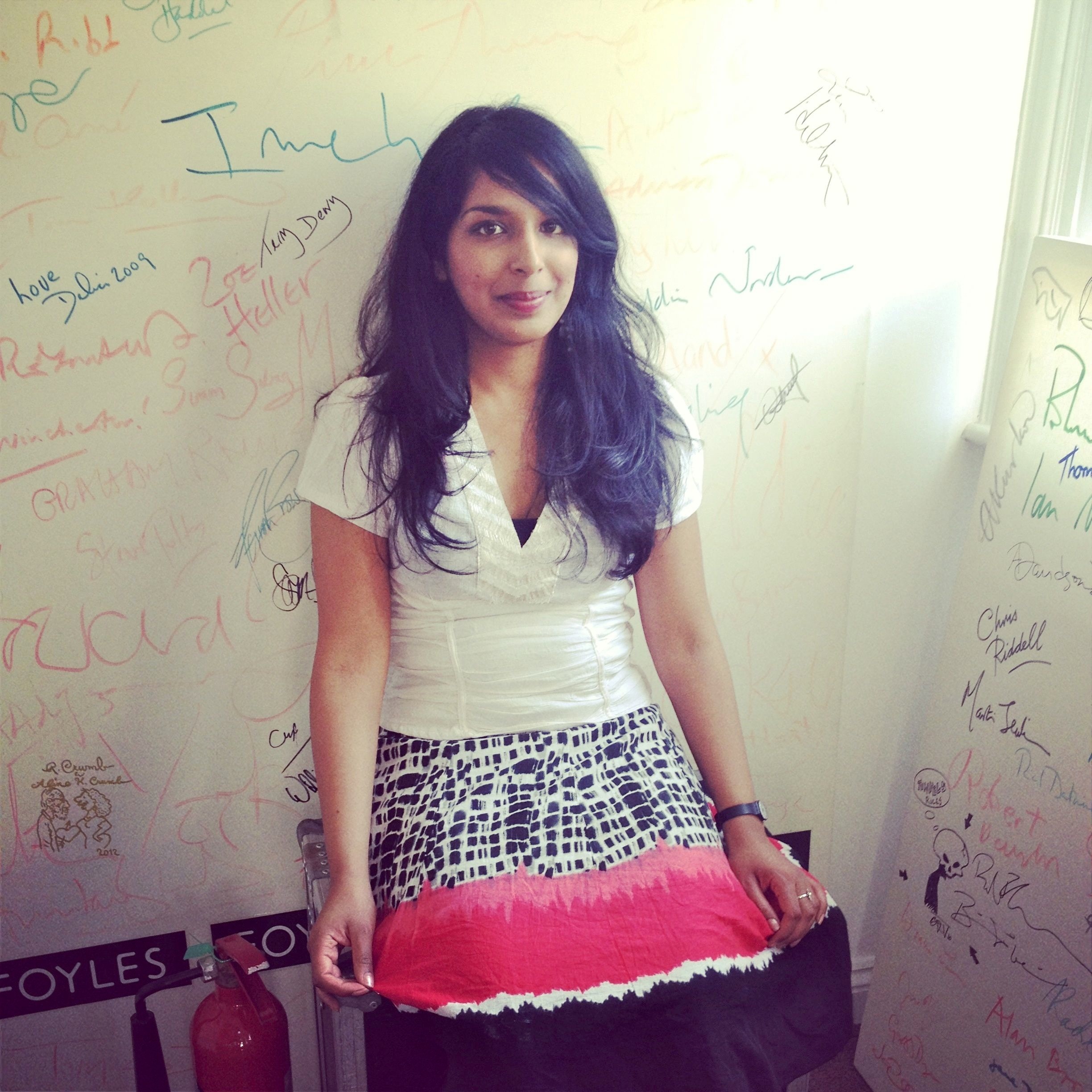
We broadcast live from Foyles booksellers, whose Green Room has an impressive board filled with author autographs of those who have read at the store; spot the signatures in the background of the first photograph below!

Panel discussions including “Writing and the Online Space” (second photograph below; thanks @Teditor) and the “new gatekeepers” of fiction ignited plenty of lively debate and my interviewees included James Meek, Charlotte Mendelson, Gabriel Gbadamosi, and Francesca Segal.

Fiction Uncovered celebrates our best British fiction writers and a theme throughout the day was not only uncovering fiction but also how fiction itself has the power to uncover hidden realms of thought and emotion.

Browsing through the bookshop later, the beauty of the book as an aesthetic object is everywhere apparent, and the day also explored the ways in which the worldwide web might enhance – rather than detract from – their power.

Image

Image

Image