From the Guardian

I interviewed the writer Edward Docx – published in The Guardian on Saturday 22nd April

Click here to read more


‘Now I never feel trapped by identity’

Interview with Edward Docx

When Edward Docx was 13 years old, his grandmother lay on her deathbed at the family home in Greater Manchester and made a startling revelation to his mother – she wasn’t who they thought she was.  

“The woman that my mum, Lila, called mum for all of her life was an Indian woman from Hyderabad – but as she lay dying, she told my mother that she wasn’t actually her mum, which obviously shocked my mum greatly.  My mum’s life turned upside down,” he explains.  She then revealed another bombshell to Lila: that her grandfather was in fact her father.  

The woman Docx knew as his grandmother, Manwar, nicknamed “Mano”, explained to Lila that her real mother had been a Russian chorus dancer – now dead – with whom Lila’s real father Ralph Partridge Snr had had a short relationship.  Ralph Partridge Snr gave the child born from the brief affair to his grown-up son by his first marriage, named Ralph Jnr, who was already married to Mano. They brought up Lila as their own.

Although Docx was in the house at the time of the revelations, they took place behind closed doors from him, and he only later found out the truth about who he was.  “I think basically mum kind of protected us all from it at the time so she could tell us in her own way”.  Rather than his mother sitting them all down to tell them, she waited to get confirmation of what Manwar had said via letters from her godmother.  “I became aware of her discussing it with my dad and then gradually me and my brothers and sisters discovering what she was discussing and why.  When my mum started a quest to get pictures of her real mum, we were fully aware of that”.  Did he ask a lot of questions? “I was really inquisitive and spent my young life trying to find things out about family and the wider world”. 

The Partridges were a military family, officers in the British Army, and the man Lila thought of as her father was called “Military Grandad” by the seven Docx siblings.  “My mum grew up thinking Military Grandad and Mano were her mum and dad – that was how it was.  Military Grandad at the end of his life abandoned Mano and they became estranged. When I was a little boy I’d go and visit them both as grandparents but gradually Military Grandad was just not there when we visited and then our mother told us he was dead.” 

Why did Lila’s father style himself in the role of grandfather and give away his child?  “Her real father lied because he had an affair and Lila was the child of that affair – simple as that.  But he also took responsibility in a way by making sure that my mother was brought up well and went to university – my mother had a really good education as a biochemist which was paid for by her real father.  That created loads of weird cross-currents and semi-dysfunctional relationships.” 

When Manwar died, did she take more secrets with her to the grave? Was there a lot left unanswered? “Yes, lots of things remain unclear and me and my brothers and sisters talk about it all the time to this day. I would have loved to have talked to her about all this – for me, I wasn’t on the front line of it like my mum so there’s a lot of questions left unanswered about their lives”. 

The woman who Docx thought of as his grandmother died and was buried in England. “It was a long journey for her as she was born in Hyderabad, the 13th child of a Brahmin family. She left her family for Ralph Partridge Jnr without their blessing and when she married him, she was cut off by her family”.

He pauses. “So that was who I thought was my grandmother…”

The gulf between who we think we are and who we turn out to be was at the heart of his Man Booker Prize longlisted novel Self-Help and is a subject in his powerful new book, Let Go My Hand.  “My mum thought she was half-Indian and that was my inheritance until I was 13.  It raises a very interesting question about nature versus nurture.  Whatever the truth of my DNA I had a major cultural reversal.  Presumably my DNA is a quarter Russian.  But I didn’t think that at all.  I thought I was a quarter Indian and loved being a quarter Indian and dreamt of going to India when I was growing up and finding my grandma’s house and even going to see her relatives and saying I know you fell out, but here I am.  So I got to the age of 13 thinking all these things…”  The discovery changed their sense of narrative about who they were. 

How did the family deal with having their identity so suddenly rocked to the core?  “Looking back, my Mum handled it with an exuberance – she started dressing in long Russian dresses and bought all these Russian icons and put them all over the house, and bought maps of the Soviet Union, and we had to listen to endless romantic Russian composers.  She became a classical music agent and started inviting musicians to stay and had concerts in the front room – Mussorgsky, Rachmaninov, Tchaikovsky and would serve syrupy Russian pancakes – blini”.  She also searched for traces of her real mother, scouring libraries for any references or photographs of her.  “She embraced her Russian heritage.  And I sort of embraced it because my Mum did. I started to go to Russia to learn more. I read all of the Russians – Tolstoy, Dostoyevsky, Turgenev, Bulgarkov – long before I could really understand them.  I realise now I did that in boyish support of my mum”.  

The oldest of seven children Docx grew up in an “eccentric, bohemian” family who lived in a ramshackle house, “slightly on the edge but never quite – no carpets, no curtains, ragged furniture, pre-historic plumbing, every thing threadbare and ancient and cobwebbed and broken-down. You don’t realise as a kid what’s going on but later in life you look back and realise wow that was quite odd”.  The eccentricity extended to family holidays:  “Because there was seven children, we couldn’t fly anywhere, that was out of the question – so we had these absolutely insane ragamuffin holidays in which they’d drive us for four weeks all over Europe camping and sleeping by rivers and lakes”.  They visited places where composers were born or died, and cathedrals and caves and concerts. Or they’d drive madly to see a Formal 1 race in, say, Holland or Germany – and sleep beside the track. “And my mum was also trying to educate us about the disasters of when democracy goes wrong, and we’d go to concentration camps like Dachau”.

Now a father of four himself, Docx has long challenged concepts of what constitutes a ‘normal family’.  The discovery of long buried secret identities in his family initially made him question everything but he is now at peace with it. “A lot of people feel trapped in an identity.  When I thought my mum was part-Indian and she was actually part-Russian, it made me feel less hidebound or delineated. A surprising number of writers sit obliquely to the cultures that they write about”.  Was it ultimately liberating, I wonder?  “Totally – now I never feel trapped by identity”. 

Lila has also found peace: “My mother has stopped her questing and settled into a happy retirement with my father. They drive around Europe  all year attending the concerts of their friends and visiting vineyards and places of historical interest. They’re seldom home now.”

Docx has been aware of the power of stories from an early age – both those that we are told and those that we tell ourselves.  Manwar was a great storyteller. “I used to sit with her when I was little, aged 6, 7, 8, 9, and listen to stories of India – amazing stories of running away from tigers and being bitten by a snake and her childhood way back in the 20s and 30s – incredibly rich and exciting stories. I would listen to her for hours. I don’t even know if she made them up, I have no idea.”  Manwar’s most powerful legacy was perhaps her stories – and how they went on to form the fertile imagination of someone who, for a living, now writes captivating stories about families. 

Let Go My Hand is published by Picador, £16.99

Photo credit: Charlie Carter


book review

unnamed.jpg

Review (published Friday 24th February, i paper)

Three Daughters of Eve

By Elif Shafak

Viking, £14.99

“Motherlands are beloved, no doubt; sometimes they can also be exasperating and maddening. Yet I have also come to learn that for writers and poets for whom national borders and cultural barriers are there to be questioned, again and again, there is, in truth, only one motherland, perpetual and portable. Storyland”.  So writes Elif Shafak – author of novels including Honour and The Forty Rules of Love – in the acknowledgements to her atmospheric, ambitious new novel which is a feat of skilful storytelling exploring both a motherland and how it feels to move away from one’s motherland as the protagonist Peri leaves her hometown of Istanbul for a new life in England. Powerfully portrayed is the painful tug of the ties that bind us to both people and places.

The intricate, multilayered novel opens in the present-day when Peri, a Turkish housewife is stuck both metaphorically and literally: a person “squeezed between what they were expected to be and what they wished to be”, she is also stuck in the Istanbul traffic with her 12 year old daughter, en route to a dinner party in a palatial seaside mansion. When a beggar snatches her handbag and she struggles to get it back, the contents tumble to the ground including an old photograph of three young women and their university professor at Oxford. That photograph – like the Proustian madeleine – prompts long buried memories to flood back of her turbulent time as a student. Chapters thereafter move between the present-day – including some deliciously satirical dinner party discussion – and the story of the past in both Istanbul and Oxford. It’s a stylistic technique of delayed gratification which succeeds in leaving the reader at times ravenously hungry for the next section of story.

Here is a hugely evocative portrait of Istanbul, a “city that encompassed seven hills, two continents, three seas and fifteen million mouths”. Violence ruptures lives, but brutality is brilliantly juxtaposed with moments of affection, such as a mother gently moving a lock of her daughter’s hair behind her ear (“The gesture, simple and affectionate, set off a rush of tenderness inside Peri”).

The author conjures both a panoramic view of place and the minute particularities of human relationships. The mother/daughter dynamic is movingly delineated through three generations. Peri was “an unusually intense and introverted child”, sensitive her mother’s mercurial moods ( “Depression was a word unheard of in the house. Headaches, she would explain”). Decades later, her twelve year old daughter Deniz mutters that she wishes to have “a normal mother”.  But through questioning cultural norms, the novel challenges the concept of a “normal mother”, and indeed motherland.

The story resists rigid dualities, exploring the space between.  For Peri, “her very existence became a battleground between competing world views. The thought that she had to make a choice, once and for all, between her mother’s defiant religiosity and her father’s defiant materialism almost paralysed her”. It’s as a student that the binaries break down – studying a course on God led by an eccentric professor prompts a fascinating examination of faith. Friendship is also a poignant theme. Piri arrives in Oxford in the year 2000 and the novel compellingly captures both her “sickening sense of loneliness”, how she “felt like an imposter”, as well as the exhilaration of freedom and intellectual exploration, and her developing friendship with Shirin and Mona with whom she discusses Islam, feminism, home and belonging. The story unfolds a scandal from her student days which ruptured relationships – and explores the possibility of healing what has been broken.

“You were not allowed to bring meat or dairy products into England from outside European countries, but no one said you couldn’t bring along your childhood fears and traumas” –  the story subtly traces the impact of characters’ childhood fears and traumas, how the weight of the painful past presses upon the present, and the paradoxical need to remember what has been forgotten in order to move on.

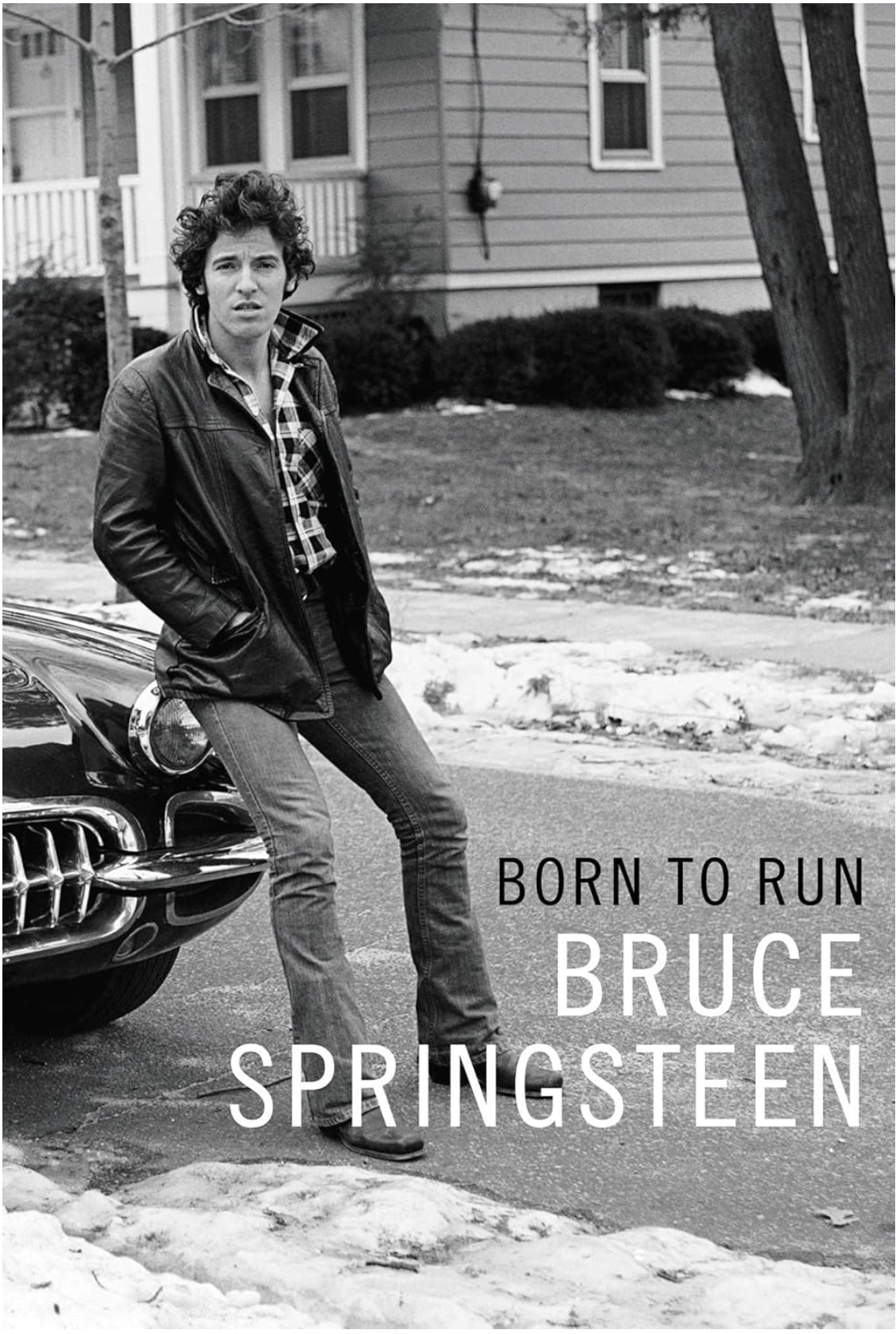
Book Review: BORN TO RUN by BRUCE SPRINGSTEEN


PUBLISHED IN INEWS, 30th September 2016

Born to Run

By Bruce Springsteen

Simon & Schuster, £20

The first word of this powerful memoir is “I” and the last word is “home”, and in the 500 pages in-between Bruce Springsteen charts with wit and wisdom how home – the desire to leave, the yearning to return and ultimately, to build a sense of home in music – is at the core of his extraordinary musical journey.   “My writing was focusing itself around identity issues – who am I, who are we, what and where is home”, he explains, of the creative fermentation which led to the song, album and now book entitled Born to Run.  


Born in the blue-collar neighbourhood of Freehold, New Jersey where his family scrambled to make ends meet, he realised that “there in the streets of my hometown was the beginning of my purpose, my reason, my passion”.  Place is so powerful a setting in many of his songs, in which he exquisitely captures that paradoxical tug to both “run” from and return.


Springsteen entertainingly traces his journey from “an outcast weirdo misfit sissy boy” to a rock’n’roll legend, from watching his grandfather repair radios scavenged from junk piles to hearing his own song played on a radio (his “number one rock’n’roll dream come true!”).  First falling in love with guitars as a youngster, he practised until his fingertips “were as hard as an armadillo’s shell” – early evidence of a work-ethic which persists to this day.


He passionately chronicles his musical influences including how Bob Dylan inspired him and gave him hope, asking questions in his songs which struck a chord with the young Springsteen (“How does it feel…to be on your own?”), and capturing so poignantly the sense of being “internally homeless”.  Bob Dylan and Woody Guthrie also fuelled his desire to meld the personal and political, and Springsteen would go on to empathetically explore social, economic and racial injustice in many songs.


“I’m a repair-man. That’s part of my job”, writes Springsteen and he sheds moving insight into how repairing the emotional damage passed down between generations is a creative purpose.  He vividly evokes growing up in a home which became “a minefield of fear and anxiety” shadowed by his father’s battle with alcoholism and mental illness, and unpicks the “legacy of pain and misunderstanding”, which he determines not to pass on.


Springsteen writes with great acuity and candour about his own depression and anxiety.  For years, performing music was his “surefire medication”.  Helped by his long-time friend and manger Jon Landau, he also tried therapy and anti-depressants. The most revelatory passages detail his battles to quieten his “self-doubting, flagellating inner voice” and transform potentially “malignant power” into creative fuel – indeed, Born to Run is a tour-de-force about how destructive impulses can be alchemised into creativity.


 “You can’t tell people anything, you’ve got to show ‘em”, is one of Springsteen’s guiding philosophies.  He concedes that he hasn’t shown us everything (“discretion and the feelings of others don’t allow it”).  But what he does show is always engrossing:  those streets which made him; how his legendary E Street Band saxophonist Clarence showed him “the possibilities of friendship”; and how he learnt to reconcile writing about people seizing life with doing so himself.


Springsteen is a masterful songwriter and fascinatingly lays bare the nuts and bolts of the song-writing process including harnessing personal emotion (“Most of my writing is emotionally autobiographical”) and transforming it into something transcendent and universal (capturing the “human longing for life and love” and the “primal need for justice”).  He is a masterful storyteller, too, able to sweep up the listener in “narrative-driven story songs” – powers which shine off these pages.

So resonant does Springsteen make his life-story that it’s a book I felt born to read.

Writing

WRITING

I’ve had a variety of articles published in the past few weeks including: a travel feature on Singapore in The National, a feature on “journeys with treasured objects” in Psychologies Magazine, an interview with Ben Okri in The National, and book reviews of “Noon” by Aatish Taseer, “Beautiful Thing” by Sonia Faleiro, and “The Sly Company of People Who Care” by Rahul Bhattacharya in The Independent.