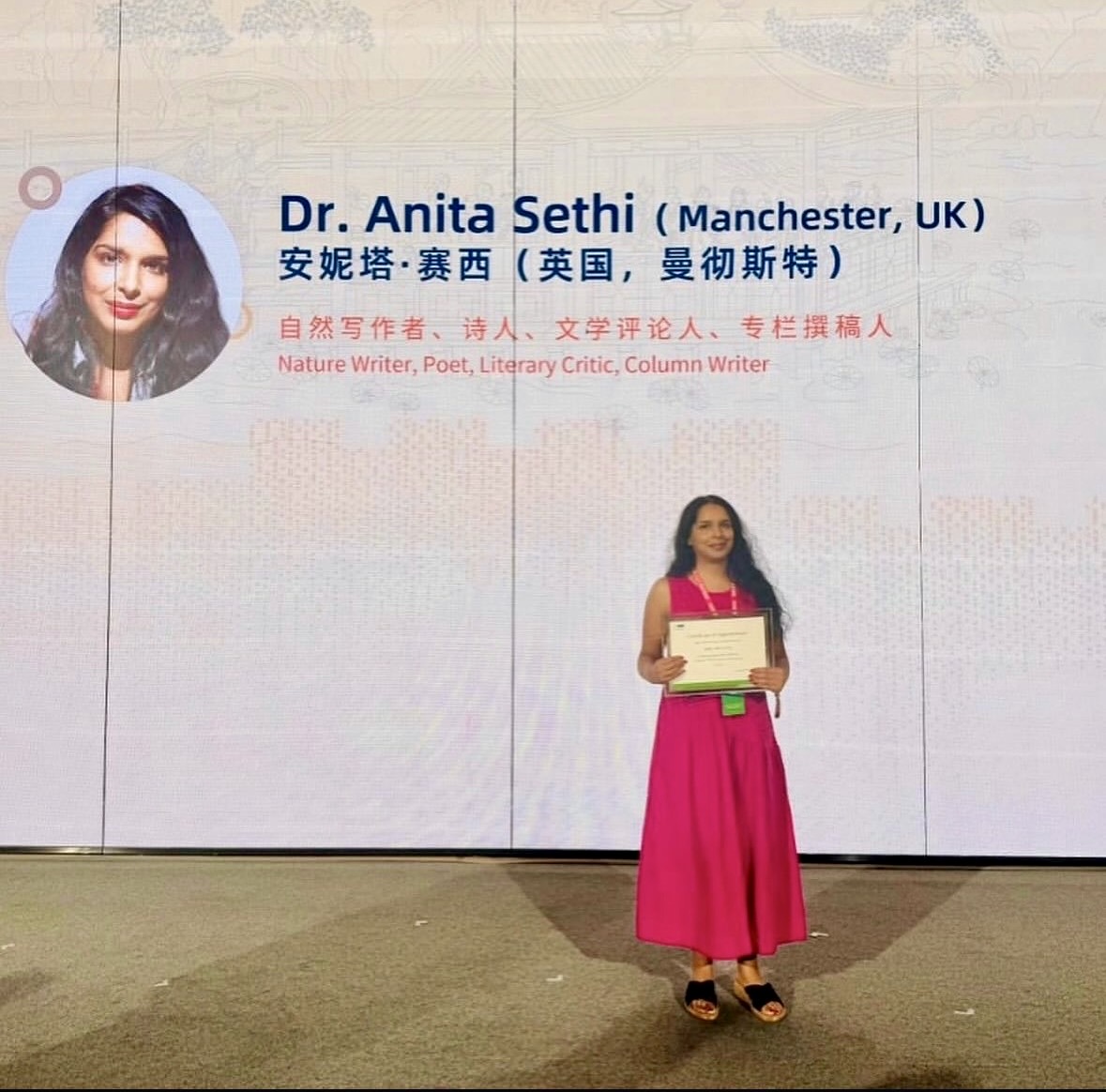
From Manchester to the world: Adventures as a City of Literature writer-in-residence in Nanjing, China.
Dispatch from Nanjing, China
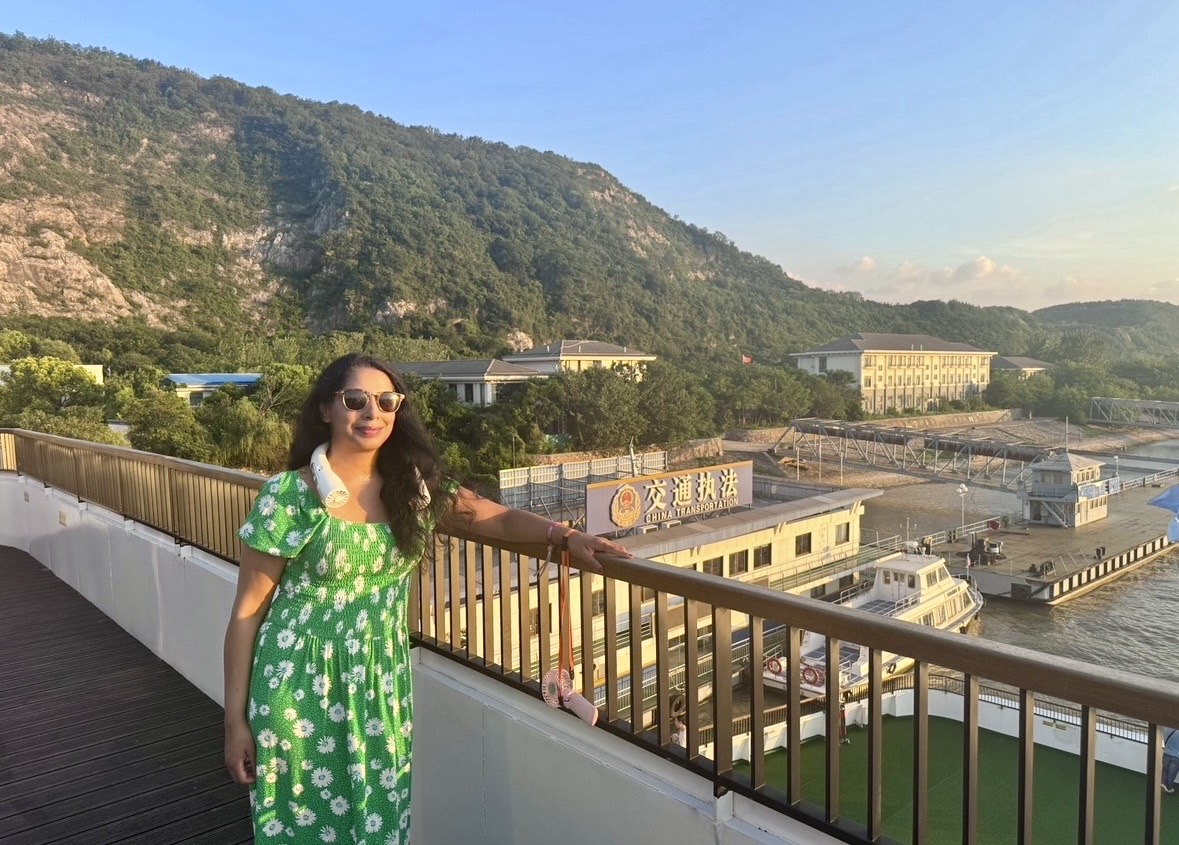
I’m watching the sun set over the mighty Yangtze River, the third largest river in the world, sailing on the Yangtze Legend ship, passing beneath the iconic Nanjing Yangtze River Bridge. As the sun slowly sinks behind skyscrapers, setting the sky ablaze and the colours begin to disperse as darkness gathers, night lights switch on, giving a whole new perspective on this place. By the time the ship sails back, the Yangtze River Bridge is magnificently illuminated.
While on the waterways, I have time to reflect on my writing residency in Nanjing, an ancient city which was China’s capital for about 400 years.
Who knew that being a writer from Manchester could take me so far, indeed could take me thousands of miles away from Manchester but so it was as I found myself on a flight from Manchester to Shanghai, watching the mountain-tops we’re flying over illustrated on the in-flight mapping in front of me: Scafell Pike (978m), Mount Blanc (4808m), Mount Narodnaya (1894m). From Shanghai, we took a high-speed train to Nanjing – an adventure in itself and exhilarating to watch the landscape speed by.
It was exciting to discover that Manchester is a UNESCO City of Literature, and is partnered with other cities in the scheme, including Nanjing where I got the chance to be International Writer in Residence for 12 days. UNESCO’s City of Literature programme is part of a wider Creative Cities Network which was launched in 2004 and is made up of 408 UNESCO Creative Cities globally, drawn from 80 countries and covering seven creative fields: Crafts & Folk Art, Design, Film, Gastronomy, Literature, Music, and Media Arts.
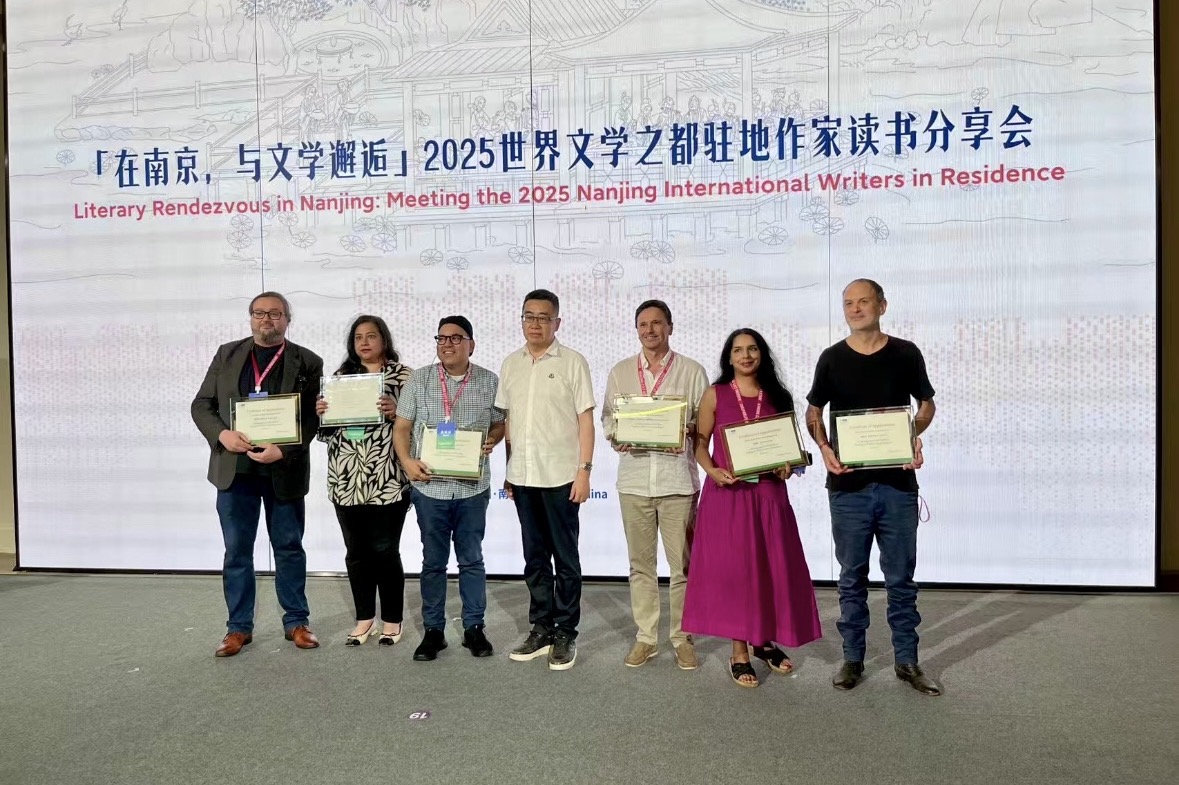
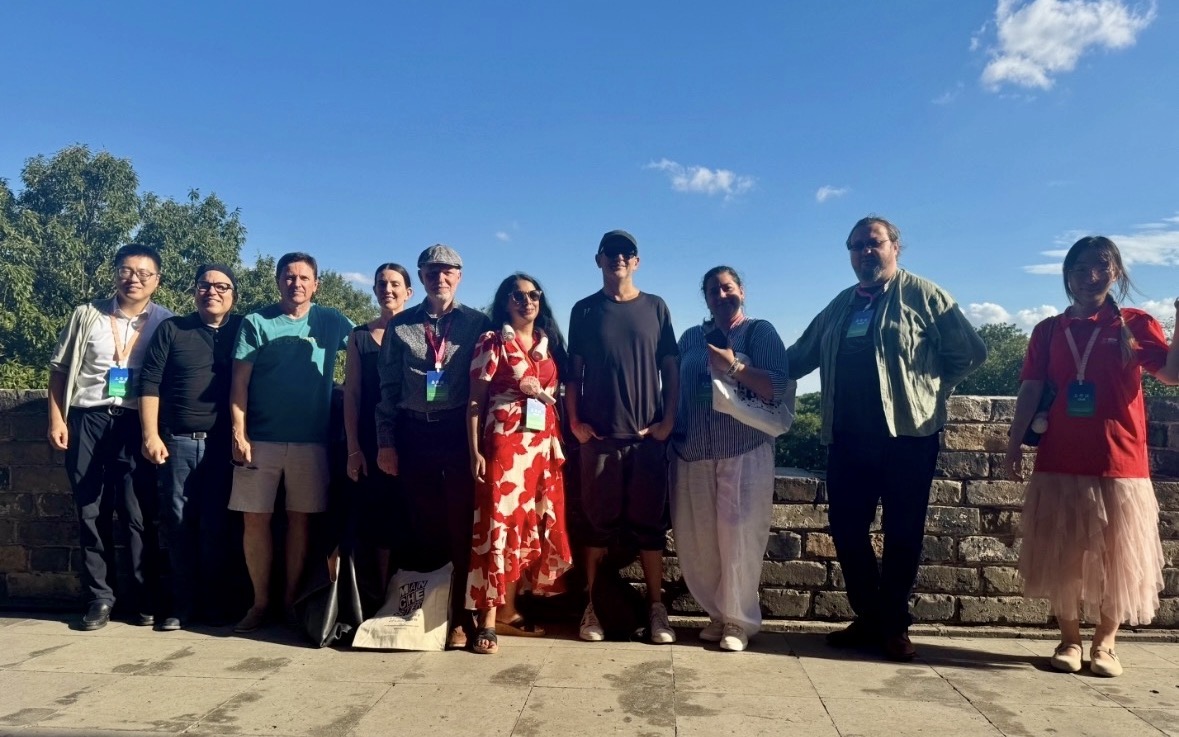
The UNESCO Cities of Literature network of 63 cities represents 6 continents and 46 countries, and a combined population of over 26 million. Joining me on the residency in Nanjing have been writers from Bremen, Montevideo, Lahore, Tukums and Obidos Cities of Literature.
Arriving in Nanjing, we journeyed to the foot of the Purple Mountain part of Zhongshan Mountain National Park, where our hotel is located on the eastern side of Nanjing in Jiangsu province, also known as Zijin Shan (Purple-Gold Mountain) named after the purple-gold clouds at sunrise and sun set. After such an exhausting journey, I was delighted to discover that my room looked out onto the Yanque Lake, indeed so close to it that at night I had the sensation of sleeping on a lake itself and my watery dreams were filled with purple-gold mountains. During my stay, I relished my dawn and dusk walks around the lake.
Literary adventures included the chance to visit the world renowned Librarie Avant-Garde bookshop, meet Nanjing publishers such as Phoenix Publishing and Media Group, Yilin Press which specialises in world literature in translation, and Fine Arts Press which focuses on art albums and visual design. Literary highlights of my trip also included speaking at the World Literature Saloon in the city’s beautiful literature hall. My time coincided with a 3-day literary symposium alongside leading writers and translators including Belen Cuadra Mora (Spain), Ahmed Sayed (Egypt), Fioro Picco (Italy), and Kim Tae Sung (Korea). Other interesting authors I met include the Chinese policeman-turned-writer A Yi author of Wake Me Up at Nine in the Morning.
On the nature of Nanjing
As a place and nature writer, having the chance to be immersed in the landscape itself was a highlight – and what an incredible landscape. I loved walking around Nanjing at night-time including the Confucius Temple-Qinhuai Scenic Area and the Nanjing Imperial Examination Museum, followed by a night-time visit to the river. It was a pleasure to walk through the cooled evening, with the lights illuminated in this ancient part of the city, the Confucius Temple looking spectacular, and to walk by the Qinhuai River, jet black yet illuminated by colourful painted boats along its surface and night lights, flowing through the Fuzimiao district.
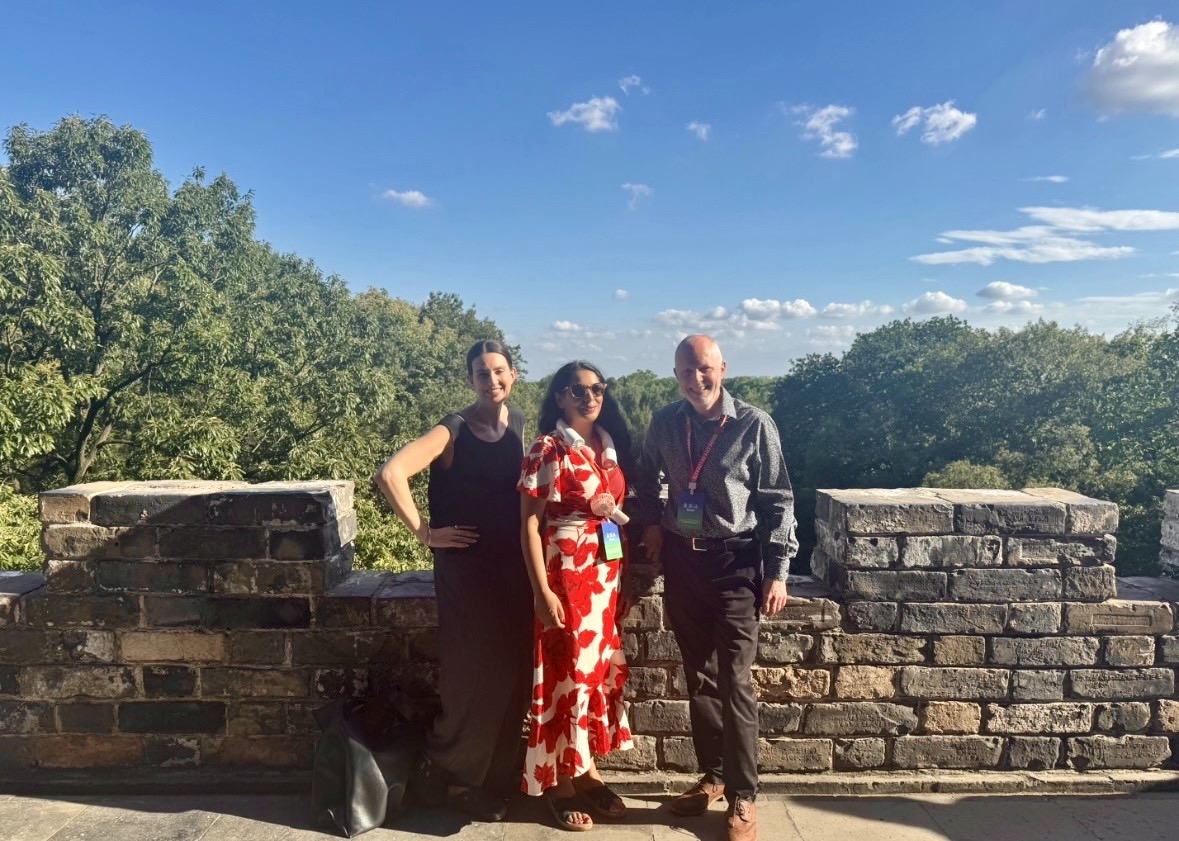
Other highlights of my trip include the architecturally impressive Xiaoling Mausoleum at the foot of the Purple Mountain and part of the Zhongshan National Park, offering a cool respite with plenty of trees granting us some shade. Here we explored the underground palace and Ming Xiao Ling Tomb. Other interesting excursions included to Jinling Traditional Town, Nanjing City Wall Museum and Zhonghua Gate, and a fascinating visit to the Purple Mountain Observatory.
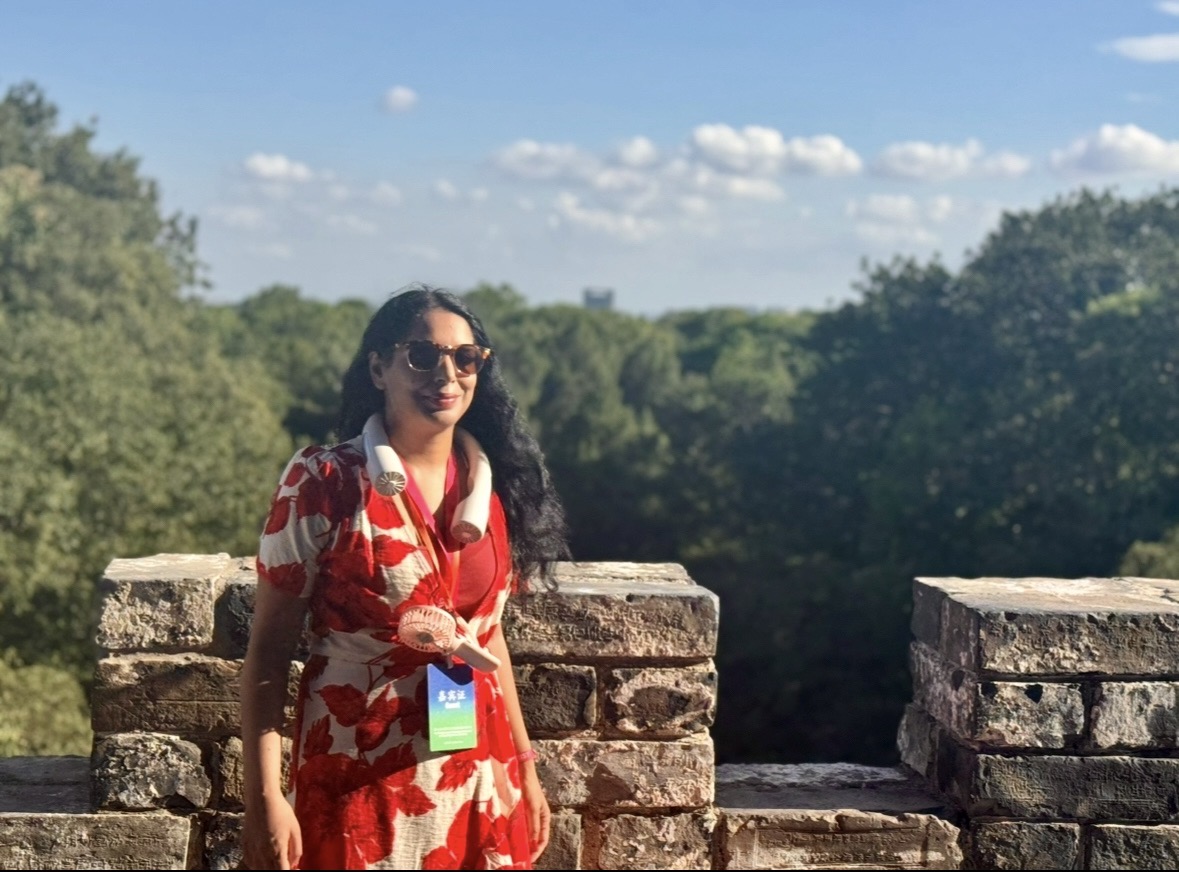
I saw both the heights and depths of Nanjing, during a trip to the Niushou Mountain and its spectacular Foding Palace (also known as Usnisa Palace), a Buddhist site since the Tang dynasty, and extending six floors underground to an enshrined Buddhist relic believed to be the only parietal relic of the Buddha. If the underground descent is thrilling, so is the ascent up Niushou Mountain; though challenging climbing up in the heat it is well worth it for the uplifting views across the Nanjing skyline.
I also saw the natural world through art at a Nanjing Deli Plaza art exhibition entitled, “Nothing Still About Still Lives: Three Centuries of Floral Compositions”, and my artistic side was delighted to take part in a calligraphy workshop, where I felt the primal power of putting ink to paper.
It’s worth noting that on 22nd July 2025 Trump made an announcement initiating withdrawal from UNESCO – the same day I was appointed ‘Distinguished Advisor to Nanjing UNESCO City of Literature’; having had the chance to meet those from UNESCO Cities of Literature in Argentina, Portugal, Germany and Pakistan as well as spending time immersed in the cultural and natural landscape in Nanjing, I have experienced first-hand the power and role of UNESCO in cultural relations, bridging divides, and opening up channels of communication across continents and cultures. I dread to think what a dystopian world might be like where UNESCO and UNESCO Cities of Literature were no longer and what we stand to lose from that. Given China’s history of censoring literature of which I gained moving insight through interviewing the excellent writer Jung Chang for the Observer, having a country in the East like China embrace UNESCO while the biggest Western democratic power, the USA, abandons it is quite astonishing. And yet, this country is still the world’s largest jailer of its own writers, and we must hope that this will change, and imprisoned writers soon be released.
It’s also been fascinating meeting the younger generation, and thanks must go to the several students who have been volunteering at the literary conference and supporting us writers in residences with practicalities – it’s been insightful hearing about the challenges they face as well as their hopes and dreams for the future.
Back in Manchester, UK, I walk by the waterways of the River Irwell, the Manchester Canal, and Bridgewater Canal, and remember my journey along the great Yangtze and everything that connects us though thousands of miles away.